Creator Story
Building BACKSPACE: A Backrooms Horror Game
How one creator recreated The Backrooms as BACKSPACE, a found-footage horror game shot through a glitchy VHS camcorder lens.

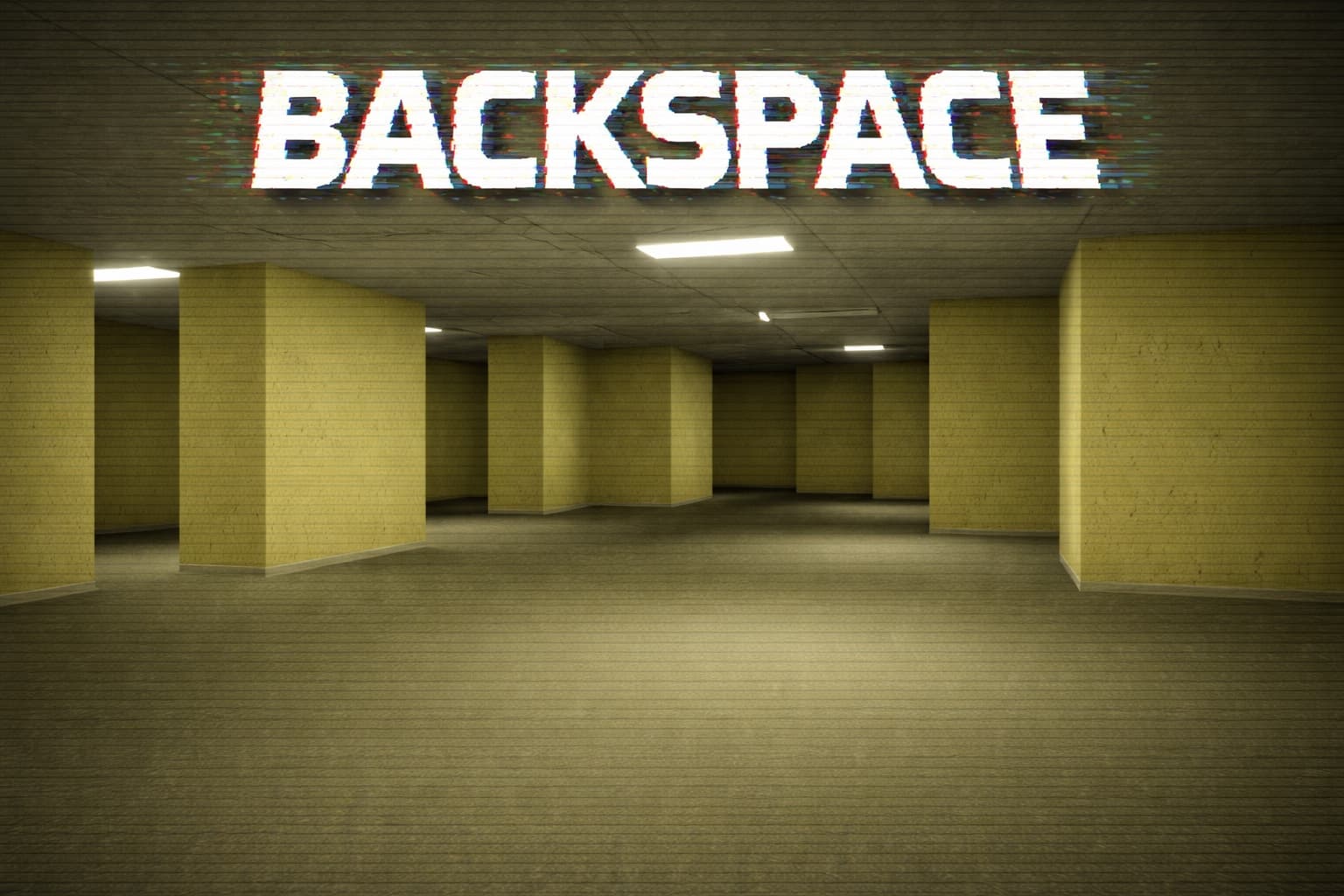
I've always been fascinated by The Backrooms, that unsettling internet mythology of infinite, empty office spaces stretching on forever. Yellow wallpaper, humming fluorescent lights, damp carpet. No purpose. No escape. Just wandering. I wanted to capture that feeling, but through a very specific lens: a cheap handheld camcorder, the kind your dad used to record birthday parties in the '90s.
The Vision
The concept was clear from the start. A first-person raycaster in the style of Wolfenstein 3D: flat-textured walls, hard pixel edges, no modern shading. The player has noclipped into The Backrooms and needs to find the exit before their camcorder battery dies. No combat, no enemies, no tutorial. Just you, the maze, and the hum of fluorescent lights.
I wanted the entire experience filtered through a VHS camcorder aesthetic. Scanlines, chromatic aberration, tracking glitches. A "REC" indicator and a battery icon in the corner, like you're watching recovered footage of someone who wandered into a place they shouldn't have.
Getting the Look Right
The first few days were consumed by the ceiling. It sounds ridiculous, but the ceiling tiles are everything in The Backrooms. I went through round after round of adjustments: the grid lines were too bold, the colours were wrong, the fluorescent light spacing felt off. I ended up flipping the floor and ceiling colour palettes entirely, which gave the space that washed-out, institutional look I was after.
The lighting took real work. I wanted fluorescent panels that weren't just textures but actually illuminated the space around them. Each light casts a soft glow on the floor tiles beneath it, with a gradient blend at the edges so there's no hard cutoff. I reduced the light frequency and randomised their placement so the space doesn't feel like a grid. Some corridors are well-lit, others fade into shadow. Some lights flicker independently, with a buzzing sound tied to the flicker. Walking through a dark stretch and hearing a light buzz to life nearby is genuinely unnerving.
The Camcorder Effect
This is where the project really came alive. Beyond the VHS overlay and scanlines, I added a shallow depth-of-field effect mimicking a cheap consumer lens: slightly soft mid-range, no sharpening. Then came the autofocus hunting: the camera occasionally loses focus and racks back, with a subtle zoom and a lens motor whine. When you're standing still, the effect is more dramatic, like the camera is searching for something to lock onto in the emptiness.
I layered in camera shake to simulate handheld footage. Not just up-and-down bobbing, but erratic, unpredictable movement that intensifies when the battery is low. When the shake reveals the edge of the rendered view, instead of showing black, I fill it with static, so it looks like the tape is physically distorting at the borders.
The halation was the finishing touch: soft bloom around light sources, blown-out highlights bleeding into surrounding areas, exactly like overexposed fluorescent lighting through a cheap lens.
Danger in the Deep
I added floor pits: random missing tiles that drop you into darkness. Only about 2% of the floor, but enough that you're always looking down. Each pit has proper depth, with raycast inner walls so it genuinely looks like the floor has given way. When you step in, the camera shakes violently and the view tilts downward like you're falling.
Getting the pit rendering right was a battle. The inner walls kept showing through floor tiles at certain angles, especially when two holes were near each other. It took several iterations of depth-sorting and clipping to get them looking correct from every viewing angle.
The Battery and the Exit
The battery indicator drives the tension. Four segments, each lasting ninety seconds. When a segment runs out, the lights flash red and the world goes dark: proper emergency lighting, where only the area immediately around each light is visible and everything else drops to near-black. An alarm echoes through the corridors.
The exit itself evolved from a simple black doorway to a proper door frame with a glowing green exit sign above it. On the death screen, I show how many metres you were from the exit, calculated as the walking distance through the maze. On the title screen, your closest attempt is remembered. It's a small thing, but it gives every failed run meaning.
What I Learned
Building BACKSPACE taught me that atmosphere is built in the margins. Not in the big features, but in the autofocus hunting, the static at the edge of the frame, the way a light buzzes louder as you walk beneath it. Every small detail compounds into something that feels real and unsettling, like you're holding the camcorder yourself, lost in a place that shouldn't exist, watching your battery tick down one segment at a time.

Inspired by BACKSPACE?
Take this game further or start your own journey